We have all been there. It is 20 minutes before the big holiday dinner. The turkey is resting, the gravy is simmering, and the rolls are golden brown. But instead of enjoying a glass of wine with your guests, you are standing over the sink, frantically peeling ten pounds of piping hot potatoes while steam ruins your hair and sweat ruins your mood.
The kitchen is chaotic, the stovetop is full, and you are exhausted before the meal has even begun.
Stop the madness.
Meet the Make-Ahead Mashed Potato. This isn’t just a recipe; it is a lifestyle change for anyone who hosts dinner parties.
Unlike standard mashed potatoes that turn gluey, dry, or “cardboard-like” when reheated, this recipe is scientifically designed to be made days in advance. The secret lies in the specific ratio of fats—specifically cream cheese and sour cream—which protect the potato starch and keep the texture silky smooth, even after a 48-hour nap in the fridge.
This dish allows you to do 100% of the work two days before Thanksgiving (or any big Sunday dinner), leaving you with nothing to do on the big day but slide a casserole dish into the oven.

Why This Recipe Works: The Science of Starch
Most people are afraid to make mashed potatoes ahead of time because they fear the dreaded “reheated texture”—stiff, dry, and unappealing. Here is why this recipe breaks that rule.
When potatoes cook and then cool down, their starch molecules tend to realign and crystallize, a process called retrogradation. In a standard recipe made with just milk and butter, this leads to a dry, gritty texture upon reheating because the moisture has been absorbed or evaporated.
- The Cream Cheese Shield: This recipe combats retrogradation with fat. Cream cheese and sour cream coat the individual starch granules. This fat barrier prevents the starches from locking together too tightly when chilled.
- Stabilized Moisture: Unlike milk, which is mostly water, sour cream and cream cheese are emulsions. They hold onto moisture better during the reheating process, ensuring the potatoes stay luscious rather than drying out.
- Oven Reheating: Instead of zapping them in a microwave (which cooks unevenly and destroys texture), we gently reheat these in a casserole dish. The sealed environment steams the potatoes back to life.
Ingredients Notes: Selecting the Right Potato
To achieve that luxurious restaurant-quality texture, every ingredient plays a specific role.
- Yukon Gold Potatoes: These are the gold standard (pun intended). They have a medium starch content and a naturally creamy, buttery flavor. They mash effortlessly into a smooth puree.
- Russet Potatoes: These are high-starch potatoes. They yield the fluffiest results but can absorb a lot of water. Pro Tip: A 50/50 mix of Russet and Yukon Gold often gives you the best of both worlds—fluffiness from the Russets and creaminess from the Golds.
- Cream Cheese: This is the non-negotiable ingredient for make-ahead success. Use full-fat, brick-style cream cheese. Low-fat versions have a higher water content and won’t stabilize the potatoes as well.
- Sour Cream: Adds a subtle tangy depth that cuts through the heaviness of the butter and starch. It brightens the flavor profile significantly.
- Butter: Unsalted butter is preferred so you can control the salt level perfectly. You will need a significant amount for the mash and extra for melting on top.
- Half-and-Half: You can also use whole milk, but half-and-half provides a richer consistency. Avoid skim milk; it is too watery and will lead to a thin mash.
- Seasonings: Garlic powder and onion powder are subtle secret weapons here. They add a savory background note (umami) that salt alone can’t achieve. Fresh chives are excellent for a pop of color and freshness at the end.
Tools of the Trade: Masher vs. Ricer vs. Mixer
The tool you use will determine the final texture of your dish. Choose wisely based on your preference.
- The Potato Ricer: This is the tool for perfectionists. It forces the potato through small holes, creating rice-sized pieces that are instantly aerated. This guarantees a 100% lump-free, silky texture without overworking the starch.
- The Hand Masher: For those who like “rustic” potatoes. If you believe a mashed potato isn’t authentic without a few small lumps to prove it’s homemade, stick with the classic hand masher.
- The Electric Mixer: This is the fastest method but the most dangerous. If you beat potatoes for too long, the cell walls rupture and release massive amounts of starch, turning your beautiful side dish into wallpaper paste. If you use a mixer, use low speed and stop the second they are combined.
Step-by-Step Instructions
This process is broken down so you can prep at your own pace.
1. Boil the Potatoes
Peel your potatoes and cut them into large, even chunks (about 1.5 to 2 inches).
- Cold Water Start: Always start potatoes in cold, salted water. If you drop them into boiling water, the outside will disintegrate before the inside is cooked.
- Boil: Bring to a boil and cook for 15-20 minutes. Test by sliding a fork into a chunk; it should meet no resistance.
- Steam Dry: Crucial Step: Drain the potatoes in a colander. Then, put them back in the hot pot on the warm stove for 1-2 minutes. Shake the pot gently. You will see steam rising—this is excess water escaping. Removing this water allows the potato to absorb the butter and cream instead.
2. Mash and Mix
- Mash: Process the hot potatoes using your chosen tool (ricer or masher) into a large bowl.
- Melt & Mix: In a separate small bowl or microwave-safe measuring cup, warm the butter and half-and-half until the butter is melted. Never add cold liquid to hot potatoes—it cools them down too fast and gums up the starch.
- Combine: Add the softened cream cheese, sour cream, warm butter mixture, garlic powder, onion powder, salt, and pepper to the potatoes. Stir or whip gently until fully combined and creamy.
3. Store (The Make-Ahead Step)
Generously butter a 9×13 inch casserole dish. Spread the mashed potatoes evenly into the dish. Use a spoon to create swirls on top (these maximize crispy edges later).
- Seal: Press a sheet of plastic wrap directly onto the surface of the potatoes. This prevents a weird “skin” or crust from forming in the fridge. Cover that layer with a sheet of aluminum foil.
- Chill: Refrigerate for up to 48 hours.
4. Reheat and Serve
When it is showtime, take the dish out of the fridge about 30-60 minutes before baking to take the chill off. This helps them heat evenly.
- Bake: Preheat oven to 350°F (175°C). Remove the plastic wrap but keep the foil on tightly. Bake for 35-45 minutes.
- Garnish: Remove the foil. If you want a golden top, broil for 2-3 minutes. Top with extra pats of butter or fresh chives and serve hot right from the baking dish.
Troubleshooting Common Potato Problems
Even with a great recipe, things can go wrong. Here is how to fix them.
- The Problem:My potatoes are gluey.
- The Cause: You likely used a food processor or electric mixer and overworked them.
- The Fix: You cannot “un-glue” them, but you can disguise the texture. Spread them in a casserole dish, top with breadcrumbs and parmesan cheese, and bake until crispy. The crunch distracts from the texture.
- The Problem:My potatoes are watery.
- The Cause: You didn’t steam dry them after draining, or you used a low-fat sour cream that separated.
- The Fix: Stir in a little more cream cheese or a handful of grated parmesan cheese to thicken the mixture up.
- The Problem:They taste bland.
- The Cause: Potatoes require a lot of salt.
- The Fix: Add salt in layers. Salt the boiling water, salt the mash, and salt the top before serving. If they still taste flat, add a teaspoon of lemon juice or apple cider vinegar—the acid wakes up the flavor.
Variations to Try
- Garlic Lovers: Roast a head of garlic in the oven while the potatoes boil. Squeeze the soft, caramelized cloves into the mash for a sweet, mellow garlic flavor.
- Loaded Potato Casserole: Before baking, stir in 1 cup of sharp cheddar cheese and 1/2 cup of crumbled bacon. Top with green onions after baking.
- Slow Cooker Method: Instead of a casserole dish, transfer the mashed potatoes to a slow cooker. Grease the insert well. On the day of serving, heat on LOW for 3-4 hours, stirring occasionally. This frees up oven space!
Leftover Ideas
These potatoes keep well, but if you have leftovers, don’t toss them!
- Potato Pancakes: Mix cold mashed potatoes with an egg, a little flour, and chopped scallions. Form into patties and fry in butter until crispy.
- Shepherd’s Pie: Use the leftovers as the topping for a quick beef and vegetable pie.
- Waffles: Yes, you can put cold mashed potatoes (mixed with an egg) into a waffle iron for a savory, crispy waffle side dish.
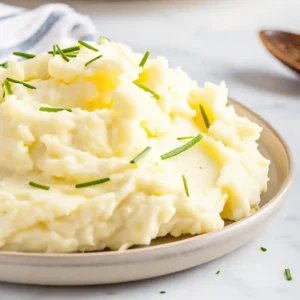
Creamy Make-Ahead Mashed Potatoes
Ingredients
Equipment
Method
- Place peeled and cubed potatoes in a large pot. Cover with cold water by 1 inch and add a generous pinch of salt. Bring to a boil over high heat.
- Cook potatoes until fork-tender, about 15–20 minutes depending on size. Drain thoroughly in a colander.
- Return drained potatoes to the hot pot over low heat for 1–2 minutes, shaking the pot occasionally to evaporate excess moisture (steam-dry).
- Using a ricer or hand masher, mash the potatoes into a large bowl until mostly smooth (avoid over-beating to prevent gluey texture).
- Warm the melted butter and half-and-half together. Add the softened cream cheese, sour cream, garlic powder, onion powder, kosher salt, and black pepper to the potatoes. Pour in the warm butter/half-and-half and fold gently until combined and creamy. Taste and adjust seasoning.
- Generously butter a 9×13-inch baking dish. Spread the potato mixture evenly into the dish and create swirls on top for crispy edges. Press plastic wrap directly onto the surface, then cover with foil. Refrigerate up to 48 hours.
- When ready to serve, remove from fridge 30–60 minutes before baking. Preheat oven to 350°F (175°C). Remove plastic wrap, keep foil loosely covered, and bake 35–45 minutes until heated through. For a golden top, remove foil and broil 2–3 minutes, watching carefully.
- Remove from oven, top with extra pats of butter and chopped fresh chives, and serve hot.