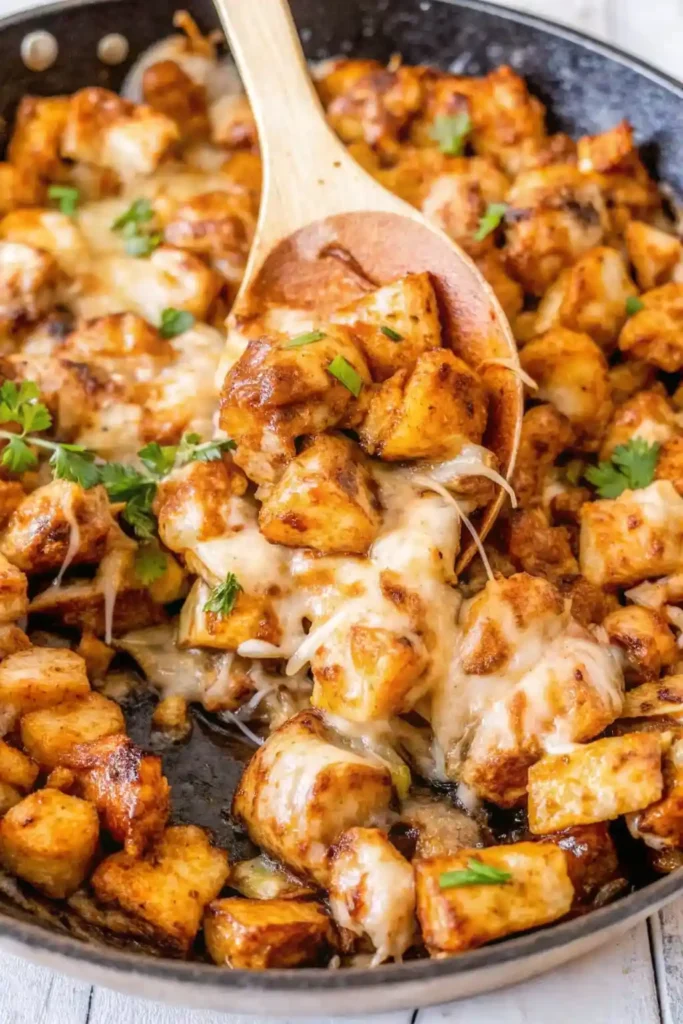
In the landscape of modern home cooking, the “one-pan skillet” has evolved from a simple convenience into a sophisticated culinary art form. The BBQ Chicken and Potato Skillet is a masterclass in this category—a dish that balances the rustic heartiness of pan-roasted tubers with the high-vibrance, smoky sweetness of classic American barbecue. While it presents as a humble weeknight meal, its success relies on specific scientific principles of heat management and moisture control to ensure the chicken remains succulent while the potatoes achieve a shatteringly crisp exterior.
The beauty of this recipe lies in its structural simplicity and its “one-pot” efficiency. By utilizing the rendered fats from the chicken to sear the potatoes, we create a cohesive flavor profile where every component is infused with the essence of the other. Whether you are seeking a high-protein “Muscle Meal,” a family-friendly comfort dinner, or a stress-free solution for weekend entertaining, this guide will show you how to master the “Maillard Crust” and the science of the perfect “par-fry” potato technique.
Why You’ll Love This Recipe
- Exceptional Texture Hierarchy: You get the deep, savory crunch of the seared potatoes meeting the tender, “melt-in-your-mouth” give of the glazed chicken.
- Superior Flavor Fusion: By building the sauce directly in the pan using the “fond” (browned bits), the BBQ flavor is layered into the core of the ingredients rather than just sitting on top.
- Effortless 30-Minute Preparation: This is a true “fast-track” gourmet meal. Most of the time is hands-off as the potatoes roast to golden perfection.
- Naturally Nutrient-Dense: Packed with complex carbohydrates for energy and high-quality protein for recovery, this is a “functional” meal that leaves you feeling satisfied.
- One-Pan Minimal Cleanup: Aside from a single heavy-duty skillet, your kitchen remains pristine, making it the premier choice for busy hosts.
Ingredient Notes & Pro Selections
Because this dish relies on a minimalist list of staples, the quality of your protein and the variety of your potato will define the final gourmet outcome.
The Protein
- Boneless, Skinless Chicken Thighs (1.5 lbs): While breasts can be used, thighs are the “Gourmet” choice for skillet cooking. They have a higher fat content and a more robust flavor that stands up to the high-heat sear without drying out.
- The Precision Dice: Slice the chicken into uniform 1-inch pieces. Uniformity is the scientific requirement for even cooking, ensuring every piece reaches the perfect internal temperature simultaneously.
The Potatoes
- Yukon Gold or Red Potatoes: These “waxy” varieties are essential. They have a lower starch content and thinner skins, which allow them to hold their shape during the sear while developing a buttery, velvet-smooth interior.
- Avoid Russets: Russet potatoes are too “floury” for this application; they tend to break apart in the pan and absorb too much sauce, resulting in a mushy texture.
The BBQ Glaze
- High-Quality Smokehouse Sauce: Look for a sauce with a balance of vinegar and molasses. The sugar in the sauce is what provides the final “lacquer” look, while the vinegar cuts through the richness of the potatoes.
- Fresh Garlic & Smoked Paprika: We utilize these aromatics to “boost” the bottled sauce, providing a fresher, more artisanal aromatic profile.
The Dairy & Garnishes
- Sharp Cheddar Cheese: Grate your own from a block. Pre-shredded cheese contains potato starch to prevent clumping, which interferes with the smooth “cheese-melt” needed for a professional finish.
- Fresh Green Onions & Cilantro: These provide a necessary “green” lift and a sharp contrast to the deep, smoky barbecue notes.
The Science of the Maillard Reaction & Potato Starch
To achieve professional-grade results, one must understand how protein and starch interact with dry heat.
- The Maillard Reaction: This is the chemical reaction between amino acids and reducing sugars that gives browned food its distinctive flavor. We sear the chicken first at a high temperature to trigger this reaction, creating a dark, savory crust that “locks in” the juices.
- Starch Gelatinization: Potatoes contain complex starches. By searing them in the chicken fat before adding the liquid BBQ sauce, we trigger “gelatinization” on the surface. This creates a protective starch barrier that keeps the interior fluffy while allowing the exterior to crisp.
- The Glaze Emulsion: BBQ sauce is high in sugar. We add it at the very end of the cooking process. Adding it too early would cause the sugars to burn before the potatoes are tender; adding it at the end creates a stable, glossy “lacquer” that clings to the ingredients.
Step-by-Step Instructions
Step 1: The High-Heat Protein Sear
Pat your chicken bites bone-dry with paper towels. Season generously with salt, pepper, and smoked paprika. Heat 2 tablespoons of olive oil in a large cast-iron or heavy stainless steel skillet over medium-high heat. Add the chicken in a single layer and sear for 3–4 minutes without moving them. This allows the Maillard crust to form. Once browned, flip and cook for another 2 minutes. Remove the chicken to a plate and cover with foil.
Step 2: The Potato “Par-Fry”
In the same skillet (don’t wash it!), add another tablespoon of oil if needed. Add the diced Yukon Gold potatoes. Sauté for 10–12 minutes, tossing occasionally.
- The Pro Tip: You want the potatoes to be about $80\%$ cooked at this stage. They should be deep golden brown on the outside and starting to soften when pierced with a fork.
Step 3: Bloom the Aromatics
Push the potatoes to the side of the pan and add the minced garlic and the white parts of the green onions. Cook for only 45 seconds until fragrant. This “blooms” the oils in the garlic, ensuring the flavor permeates the entire dish.
Step 4: The Integration
Return the seared chicken (and any accumulated juices) to the skillet with the potatoes. Pour the BBQ sauce over the top. Toss vigorously over medium heat for 2–3 minutes. The sauce will begin to bubble and reduce, creating a thick, sticky glaze that “velcroes” to the potatoes.
Step 5: The Cheese Melt
Sprinkle the shredded cheddar over the top of the skillet. Turn the heat to low and cover with a lid for 1–2 minutes, or until the cheese is bubbling and completely melted.
Step 6: Garnish and Serve
Remove from the heat. Top with the green parts of the green onions and fresh cilantro. Serve immediately straight from the skillet for a rustic, high-impact presentation.
Secrets to a Pro-Level Skillet Finish
- Don’t Overcrowd the Pan: If the chicken or potatoes are too close together, they will steam in their own moisture rather than developing a crust. Use a large 12-inch skillet to ensure every piece has its own “space” to brown.
- The “Buffer” Rest: If you find your potatoes are browning too fast but are still hard in the middle, add 2 tablespoons of water to the pan and cover it for 3 minutes. The steam will cook the interior while the starch exterior remains intact.
- Acid Balance: If the BBQ sauce feels too sweet, add a tiny squeeze of fresh lime juice or a teaspoon of apple cider vinegar right before serving. Acid acts as the “volume knob” that wakes up the savory flavors.
- The Cast Iron Advantage: Using a cast-iron skillet provides superior heat retention, ensuring that the bottom layer of potatoes achieves a “hash-brown” style crunch that is the hallmark of a gourmet skillet.
Variations and Substitutions
- Spicy Chipotle Skillet: Add 2 tablespoons of minced Chipotle in Adobo to the BBQ sauce for a smoky, lingering heat.
- The “Garden” Skillet: Fold in 2 cups of fresh bell peppers and onions during the potato sauté phase for extra nutrients and color.
- Bacon-Infused BBQ: Fry 4 strips of chopped bacon in the skillet before starting the chicken. Use the rendered bacon fat to cook the chicken and potatoes for a “Luxury” savory boost.
- Vegan Option: Substitute the chicken with firm pressed tofu and use a plant-based cheddar alternative. Tofu sears exceptionally well and absorbs the BBQ glaze beautifully.
Storage and Reheating Guide
- Refrigerator: Store leftovers in an airtight container for up to 3 days.
- The Reheat Challenge: Potatoes can become “mealy” when microwaved. For the best result, reheat in a skillet over medium heat with a tiny splash of water. This restores the glossy BBQ glaze and brings back the potato’s fluffiness.
- Do Not Freeze: Cooked potatoes in a sugar-based glaze do not survive the freezing process; the starch structure collapses, resulting in a watery and unappealing texture upon thawing.
FAQ
What is the best BBQ sauce to use? For a “Gourmet” result, we recommend a “Kansas City Style” sauce, which is thick and sweet, or a “Carolina Gold” (mustard-based) if you prefer a tangier, sharper profile.
Can I use frozen potatoes? Yes, but you must thaw them completely and pat them bone-dry. Frozen potatoes are already par-cooked, so reduce the potato sauté time by half.
Why is my chicken dry? This usually happens if the chicken was cooked for too long before the sauce was added. Ensure you remove the chicken as soon as it has a good sear; it will finish cooking once you return it to the pan with the sauce.
Is this dish very spicy? No. Most BBQ sauces are mild. If you want heat, you must add it through red pepper flakes or hot sauce.
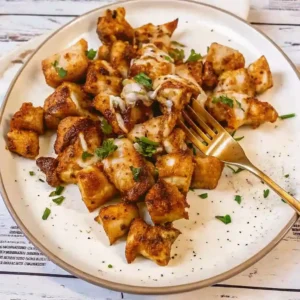
BBQ Chicken and Potato Skillet
Ingredients
Method
- Pat chicken bites dry. Season with salt, pepper, and smoked paprika. Heat 2 tbsp olive oil in a skillet over medium-high heat. Sear chicken 3-4 minutes per side until browned. Remove and cover with foil.
- Add diced potatoes to the same skillet with 1 tbsp oil if needed. Sauté 10-12 minutes, tossing occasionally until 80% cooked and golden on the outside.
- Push potatoes aside. Add minced garlic and white onion parts, cooking 45 seconds until fragrant.
- Return chicken and any juices to skillet. Pour BBQ sauce over everything. Toss over medium heat 2-3 minutes until sauce bubbles and reduces slightly.
- Sprinkle shredded cheddar over the top. Cover skillet and melt cheese 1-2 minutes over low heat.
- Garnish with sliced green onions and chopped cilantro. Serve immediately straight from the skillet.