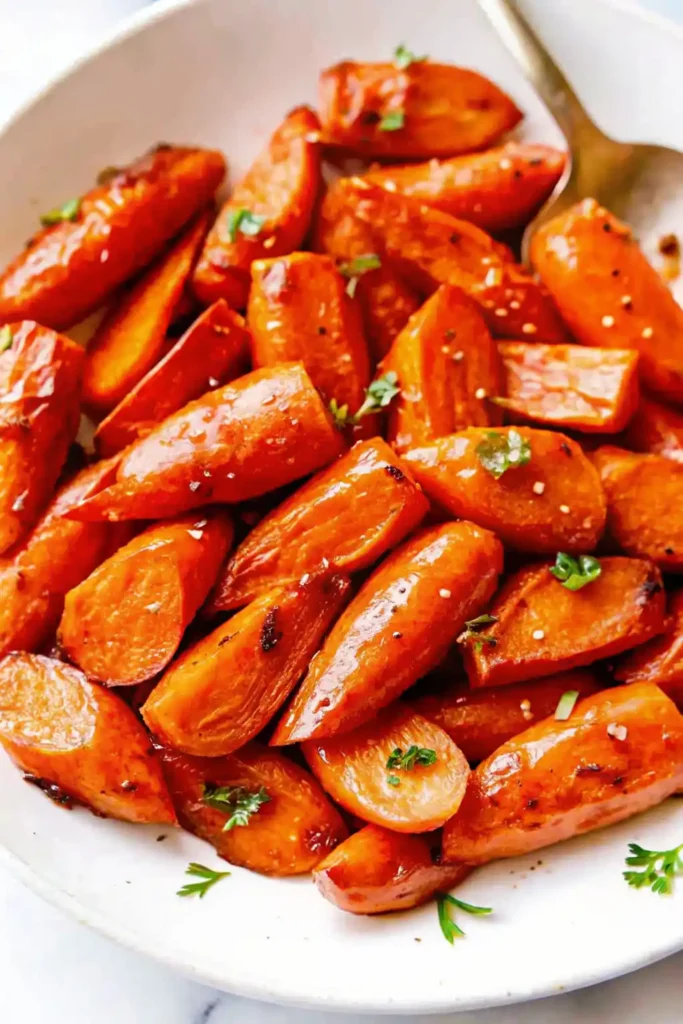
In the landscape of classic side dishes, the carrot often suffers from a reputation of being a utilitarian after-thought—frequently boiled into submission or served raw and uninspired. however, when treated with professional roasting techniques and a high-quality glaze, this humble root vegetable transforms into a “Gourmet Side” that can anchor even the most sophisticated holiday table. These Honey Glazed Carrots are a masterclass in the balance of earthy sweetness and rich, buttery caramelization.
The secret to a world-class glazed carrot lies in the management of moisture and the physics of heat distribution. By utilizing a high-temperature roast rather than a stovetop simmer, we trigger the Maillard reaction, converting the carrot’s natural sugars into complex, savory-sweet compounds that a simple boil cannot replicate. Whether you are hosting a formal Thanksgiving dinner, a festive Easter brunch, or simply seeking a high-nutrient addition to a weeknight roast, this guide will show you how to master the “diagonal-cut” technique and the science of a stabilized honey-butter emulsion.
Why You’ll Love This Recipe
- The Ultimate Flavor Balance: It perfectly hits the culinary “Holy Trinity” of side dishes: the natural earthiness of the vegetable, the floral sweetness of honey, and the salty richness of European butter.
- Superior Texture Hierarchy: Unlike mushy boiled carrots, these roasted versions feature a “tender-crisp” interior with a slightly tacky, caramelized exterior that provides a satisfying bite.
- High Visual Impact: By utilizing rainbow carrots, you create a high-fashion, vibrant aesthetic that requires zero effort to look professional.
- Effortless Scalability: This is the ideal dish for large gatherings; you can roast three pounds of carrots just as easily as one, provided you don’t crowd the pan.
- Nutrient-Dense & Vibrant: Carrots are a powerhouse of Beta-Carotene and Vitamin A. The inclusion of healthy fats from the butter and oil actually helps your body absorb these fat-soluble vitamins more effectively.
Ingredient Notes & Pro Selections
Because this recipe relies on a minimalist list of ingredients, the quality of your produce and your sweetener will dictate the final gourmet outcome.
The Carrots
- Rainbow Carrots (Recommended): Using a mix of purple, yellow, and orange carrots provides varying levels of sweetness and a stunning professional presentation.
- Whole vs. Baby: For a “Gourmet” result, always choose whole, fresh carrots with the green tops still attached. Pre-peeled “baby carrots” are actually larger carrots shaved down; they lack the structural integrity and deep flavor of a true whole carrot.
- Freshness Check: Look for carrots that are firm and “snap” when bent. If they are limp or rubbery, they have lost too much moisture and will not caramelize properly.
The Sweetener
- Raw Wildflower Honey: This provides a more complex, floral depth than standard clover honey.
- Alternative: High-quality Maple Syrup (Grade A) can be used for a more autumnal, woodsy flavor profile.
The Fats & Aromatics
- Unsalted European Butter: Because carrots are naturally sweet, using unsalted butter allows you to control the salinity perfectly. High-fat butter (like Kerrygold) creates a glossier, more stable glaze.
- Extra-Virgin Olive Oil: A splash of oil is used during the roasting phase to raise the smoke point, preventing the butter from burning during the long roast.
- Fresh Herbs: Flat-leaf Italian parsley or fresh thyme provides the necessary “green” finish to cut through the heavy glaze.
The Science of the Reduction Glaze
To achieve professional-grade results, one must understand the chemistry of the glaze. A successful glaze is an emulsion of fat and sugar that has been reduced to remove excess water.
- Moisture Evaporation: Carrots are roughly 88% water. As they roast at 400°F, that water evaporates, concentrating the sugars.
- Caramelization vs. Maillard: The honey provides external sugar for caramelization, while the proteins in the butter and the vegetable itself undergo the Maillard reaction. This dual process creates the “Gourmet” mahogany color.
- The Emulsion: Whisking the honey and butter together with a splash of carrot juice (released during cooking) creates a thick coating that “clings” to the vegetable rather than sliding off to the bottom of the pan.
Step-by-Step Instructions
Step 1: Prep the Carrots (The Diagonal Cut)
Preheat your oven to 400°F (204°C). Peel the carrots and trim the tops, leaving about an inch of green for a rustic, artisan look. The Secret Technique: Slice the carrots on a sharp diagonal into 2-inch long pieces. This “bias cut” creates more surface area than a round cut, allowing for more caramelization and glaze contact.
Step 2: The Initial Roast
On a large rimmed baking sheet, toss the carrots with 1 tablespoon of olive oil and a generous pinch of fine sea salt and cracked black pepper. Spread them in a single layer. If they are overlapping, they will steam and become mushy. Roast for 15–20 minutes until they are just starting to soften and show light brown spots.
Step 3: Whisk the Glaze
In a small bowl, whisk together 2 tablespoons of melted butter and 3 tablespoons of honey.
- Gourmet Tip: Add a tiny pinch of ground ginger or cinnamon to the glaze to add a subtle, professional aromatic layer.
Step 4: The Glazing Phase
Remove the pan from the oven. Pour the honey-butter mixture over the carrots. Use a spatula to toss them thoroughly, ensuring every inch of the diagonal cut is coated. Return the pan to the oven for another 10–15 minutes.
Step 5: The Final Toss
Remove the carrots from the oven. At this point, the glaze should be bubbling and thick. Toss the carrots one last time on the hot pan. This “finish” allows the cooling glaze to thicken and adhere perfectly to the carrots as they move from the pan to the serving platter.
Step 6: Garnish and Serve
Transfer to a warmed bowl. Sprinkle with freshly chopped parsley and a final dusting of flaky sea salt (like Maldon). Serve immediately.
Secrets to a Pro-Level Finish
- Don’t Over-Peel: Use a sharp “Y-peeler” to take off only the thinnest layer of skin. Much of the carrot’s flavor and color lives just beneath the surface.
- Temperature Management: If your oven runs hot, the honey can go from caramelized to burnt very quickly. Watch closely in the final 5 minutes.
- The “Resting” Glaze: If the carrots look too liquidy when you pull them out, let them sit on the baking sheet for 3 minutes before tossing. The sugars will naturally firm up as the temperature drops.
- Acid Balance: If the dish feels too sweet, give the carrots a tiny spritz of fresh lemon juice right before serving. Acid is the “volume knob” that balances the sugar and fat.
Variations and Substitutions
- Spicy Honey Carrots: Add 1/2 teaspoon of red pepper flakes or a teaspoon of Sriracha to the glaze for a “swicy” Mediterranean-adjacent kick.
- The “Tuscan” Roast: Swap the parsley for fresh rosemary and add 3 cloves of smashed garlic to the roasting pan.
- Vegan Option: Replace the butter with Extra-Virgin Olive Oil or Virgin Coconut Oil, and use maple syrup instead of honey.
- Balsamic Twist: Add 1 tablespoon of aged balsamic vinegar to the honey-butter mix for a deeper, more acidic profile.
Storage and Reheating
- Refrigerator: Store leftovers in an airtight container for up to 4 days.
- The Reheat: To maintain the texture, reheat in a skillet over medium heat with a teaspoon of water to “loosen” the glaze. Avoid the microwave if possible, as it can make the carrots rubbery.
- Freezing: We do not recommend freezing glazed carrots, as the cellular structure of the root vegetable collapses upon thawing, resulting in a watery, unappealing texture.
FAQ
Why are my carrots mushy? This usually happens if the roasting pan was overcrowded or if they were cooked at too low a temperature. Ensure your oven is at a true 400°F and that the carrots have plenty of breathing room.
Can I make these ahead of time? You can peel and cut the carrots up to 48 hours in advance. However, for the best texture, we recommend roasting them fresh.
Do I have to peel them? For a “Gourmet” presentation, peeling is preferred as it creates a smoother surface for the glaze to coat. If using organic garden carrots, a good scrub with a stiff brush is often enough.
What is the best way to serve these for a party? Arrange the carrots on a long, narrow platter rather than a deep bowl. This shows off the different colors of the rainbow carrots and the glossy sheen of the glaze.
Honey Glazed Carrots
Ingredients
Method
- Preheat your oven to 400°F (204°C). Peel the carrots and trim the tops, leaving about an inch of green for a rustic look. Cut the carrots into 2-inch diagonal slices for more surface area, which promotes better caramelization.
- On a large rimmed baking sheet, toss the carrots with olive oil, sea salt, and black pepper. Spread them in a single layer to avoid steaming. Roast for 15–20 minutes, until the carrots just start to soften and show light brown spots.
- While the carrots are roasting, whisk together the melted butter and honey in a small bowl. Optionally, add ground ginger or cinnamon for a more aromatic finish.
- Once the carrots are roasted, remove the pan from the oven and pour the honey-butter mixture over the carrots. Toss them well to ensure each piece is coated. Return the pan to the oven for another 10–15 minutes.
- After roasting, remove the carrots from the oven and toss them one last time in the pan. This ensures the glaze thickens and adheres evenly to the carrots. Transfer the carrots to a warmed serving bowl and garnish with fresh parsley.