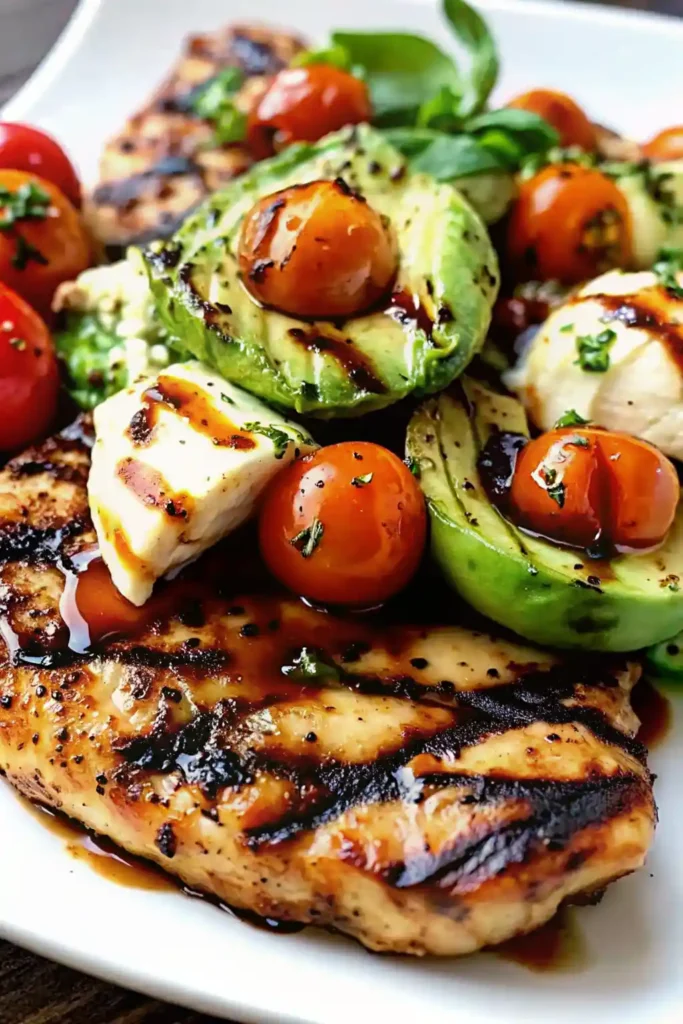
In the landscape of high-performance summer dining, the California Avocado Chicken stands as the definitive intersection of lean protein and healthy fats. This dish is a masterclass in culinary “freshness”—featuring succulent, honey-lime marinated chicken breasts charred to perfection and topped with a vibrant “California-style” salsa of buttery avocado, sun-ripened tomatoes, and sharp red onion. It is a dish that celebrates the bounty of the Pacific coast while delivering a sophisticated flavor profile that moves beyond the standard barbecue routine.
The secret to a world-class avocado chicken lies in the management of “flavor-layering” and the science of the Acid-Fat Emulsion. Most home-cooked versions suffer from a one-dimensional sweetness or an avocado topping that oxidizes before it hits the table. This guide utilizes a professional “citrus-seal” technique and specific marination timing to ensure the chicken remains tender while the avocado stays a vivid, emerald green. Whether you are seeking a high-protein “Clean Eating” favorite, a sophisticated date-night meal, or a 20-minute summer dinner, this guide will show you how to master the “honey-caramelization” sear and the secrets to achieving the perfect California-fresh balance.
Why You’ll Love This Recipe
- Exceptional Flavor Synergy: It perfectly hits the “Agave-Citrus” balance, where the natural sugars of the honey caramelize under the flame while the lime juice provides a sharp, electric lift.
- Superior Texture Hierarchy: You get the savory “snap” of the grilled chicken meeting the velvet-smooth creaminess of the avocado and the juicy explosion of fresh tomatoes.
- Nutrient-Dense & Lean: Packed with monounsaturated fats from the avocado and high-quality lean protein, this is a “functional” meal that leaves you feeling revitalized.
- Vibrant Visual Impact: The deep golden-brown char of the chicken against the bright green and red toppings creates a high-fashion aesthetic for any table.
- Effortless 20-Minute Cook Time: Once the marination is complete, this dish moves from the grill to the plate in under fifteen minutes.
Ingredient Notes & Pro Selections
Because this dish relies on a minimalist list of fresh components, the quality of your produce and the specific fats in your marinade will define the final gourmet outcome.
The Protein
- Boneless Skinless Chicken Breasts (1.5 lbs): Look for organic, air-chilled breasts for the best flavor.
- The Pounding Rule: To achieve professional results, you must pound the chicken to an even $1/2$-inch thickness. This is the scientific requirement for even heat distribution, ensuring the edges don’t dry out before the center is cooked.
The Honey-Lime Marinade
- Fresh Lime Juice & Zest: You will need 3 large limes. Always zest the fruit before juicing; the essential oils in the zest provide the primary aromatic lift that defines “California” cuisine.
- Extra-Virgin Olive Oil: Acts as the fat carrier, protecting the chicken from sticking to the grill while carrying the honey and spices deep into the muscle fibers.
- Raw Honey: The sugar in the honey is what facilitates the Maillard reaction (browning) on the grill, creating those iconic, sweet-and-smoky grill marks.
The California Avocado Salsa
- Hass Avocados: Look for avocados that have a dark, pebbly skin and give slightly when pressed. They provide the necessary “buttery” fat to balance the lean chicken.
- Roma or Grape Tomatoes: These have a lower water content than slicing tomatoes, ensuring your salsa stays chunky rather than watery.
- Fresh Cilantro & Red Onion: Provide the sharp, herbal “bite” that cuts through the richness of the avocado.
The Science of Enzymatic Browning & Emulsification
To achieve professional-grade results, one must understand how to manage oxygen and acid.
- Acid-Fat Emulsification: When we whisk lime juice (acid) with honey and oil (fat), we create a temporary emulsion. This thick liquid “velcroes” to the chicken, ensuring the flavor doesn’t just drip off into the grill flames.
- Enzymatic Browning Prevention: Avocados turn brown when the enzyme polyphenol oxidase is exposed to oxygen. By tossing the avocado cubes in fresh lime juice and olive oil immediately after cutting, we create a physical and chemical “seal” that slows down oxidation, maintaining the $pH$ at a level that inhibits enzyme activity.
- Honey Caramelization: Honey has a lower burning point than granulated sugar. We grill over medium-high heat (rather than high) to allow the honey to caramelize into a mahogany glaze without scorching the exterior of the chicken.
Step-by-Step Instructions
Step 1: The Precision Pound
Place your chicken breasts between two sheets of plastic wrap. Using a meat mallet or a heavy skillet, pound them until they are a uniform $1/2$-inch thick.
Step 2: The Citrus Infusion
In a large bowl, whisk together the olive oil, honey, lime juice, lime zest, minced garlic, and a pinch of dried oregano. Reserve 2 tablespoons of this mixture for the avocado salsa. Add the chicken to the remaining marinade and refrigerate for 30 minutes to 2 hours.
- Crucial Rule: Do not marinate longer than 4 hours. The high acidity of the lime juice will begin to “cook” the chicken fibers, resulting in a rubbery texture once grilled.
Step 3: Prep the California Salsa
While the chicken marinates, dice the avocado, tomatoes, and red onion into uniform $1/4$-inch cubes. Toss immediately with the reserved marinade and a handful of fresh chopped cilantro. Cover with plastic wrap, pressing the wrap directly onto the surface of the salsa to eliminate air.
Step 4: The High-Heat Sear
Preheat your grill to medium-high heat (approx. $400^{\circ}F$). Remove the chicken from the marinade and place on the grill. Cook for 5–6 minutes per side.
- The Visual Cue: You are looking for deep, caramelized grill marks and an internal temperature of $165^{\circ}F$ ($74^{\circ}C$).
Step 5: The Mandatory Rest
Transfer the chicken to a warm platter. Cover loosely with foil and let it rest for 5 full minutes.
- Why wait? This allows the internal juices to redistribute through the muscle fibers, ensuring the breast is succulent rather than dry when sliced.
Step 6: Final Garnish and Serve
Place each grilled chicken breast on a plate. Top with a generous mountain of the California Avocado Salsa. Garnish with an extra wedge of lime and a sprig of fresh cilantro.
Secrets to a Pro-Level Finish
- Avoid the “Flame-Up”: Since the marinade contains honey and oil, keep a close eye on the grill. If the honey starts to smoke excessively, move the chicken to a cooler part of the grill momentarily.
- Cold Salsa, Hot Chicken: The temperature contrast between the sizzling, charred chicken and the ice-cold, refreshing salsa is the hallmark of a high-end coastal bistro.
- Acid Balance: Always taste your salsa right before serving. If it tastes “flat,” add one more squeeze of lime. Acid is the “volume knob” that makes the savory chicken flavors pop.
- The “Clean” Grill: Ensure your grill grates are perfectly clean and oiled before adding the chicken. The honey in the marinade makes the chicken prone to sticking; a clean surface ensures a professional release.
Variations and Substitutions
- Spicy California Chicken: Add $1/2$ teaspoon of red pepper flakes to the marinade for a “swicy” (sweet and spicy) kick.
- Bacon-Avocado Fusion: Top the finished dish with crispy crumbled bacon for a “Luxury” salty contrast to the creamy avocado.
- Cilantro-Lime Shrimp: Use the same marinade for jumbo shrimp. Only marinate for 15 minutes and grill for 2–3 minutes per side.
- Vegan Option: Replace the chicken with thick-cut cauliflower steaks. Roast or grill until tender and top with the same avocado salsa.
Storage and Meal Prep Guide
- Refrigerator: Store the chicken and salsa in separate airtight containers for up to 2 days.
- Reheating: Reheat the chicken in a skillet over medium-low heat with a tiny splash of water to “loosen” the honey glaze. Once warm, top with the fresh salsa. Avoid the microwave if possible, as it can make the chicken “spongy.”
- Do Not Freeze Salsa: Fresh avocado salsas do not survive the freezing process; the cellular structure of the fruit will collapse, resulting in a watery puree upon thawing.
FAQ
What if I don’t have a grill? A heavy cast-iron skillet or a ribbed grill pan on the stovetop provides an excellent sear and mimics the flavor of an outdoor grill beautifully.
Can I use canned tomatoes? No! The integrity of this dish relies on the “crunch” of fresh produce. Canned tomatoes are too soft and will turn the avocado salsa into a mushy soup.
How do I keep the avocado from turning brown? As mentioned, the lime juice in the reserved marinade is your best friend. Ensure every cube of avocado is fully coated in the acidic liquid.

Grilled California Avocado Chicken
Ingredients
Method
- Place chicken breasts between plastic wrap and pound to 1/2-inch thickness.
- Whisk olive oil, honey, lime juice, lime zest, garlic, and oregano. Reserve 2 tbsp for salsa. Marinate chicken 30 min–2 hrs in remaining mixture.
- Dice avocados, tomatoes, and red onion. Toss with reserved marinade and cilantro. Cover with plastic wrap directly on surface.
- Preheat grill to medium-high (approx. 400°F). Grill chicken 5–6 min per side until internal temp 165°F.
- Transfer chicken to platter, cover loosely with foil, rest 5 min.
- Plate chicken, top with avocado salsa, garnish with lime wedges and cilantro.