In the world of high-impact summer cooking, the most successful dishes are those that treat seasonal produce with professional technical respect. While zucchini is often relegated to a watery side dish, it transforms into a culinary centerpiece when paired with the bright, electric acidity of fresh lemon and the nutty depth of aged parmesan. This Lemon Zucchini Pasta is a masterclass in this transformation—a “One-Pan” adjacent meal that relies on the Maillard reaction and starch-water emulsification to create a sauce that is light, silk-smooth, and deeply aromatic.
The secret to a world-class zucchini pasta lies in the management of moisture. Zucchini is approximately 95% water; if handled incorrectly, it can turn a vibrant pasta dish into a soggy, characterless bowl of mush. This guide utilizes a professional “dry-sear” technique to lock in flavor and achieve those coveted golden-brown edges. Whether you are seeking a refined vegetarian main for a garden party or a healthy 20-minute dinner for a busy Tuesday, this recipe provides a restaurant-quality experience with simple pantry staples. Let’s explore the science of zucchini caramelization and the secrets to achieving the perfect citrus-to-fat balance.
Why You’ll Love This Recipe
- Effortless 20-Minute Preparation: This is a true “fast-food” gourmet meal. The sauce is prepared in the exact time it takes to boil the pasta water and cook the noodles.
- Superior Texture Control: By using a specific slicing and searing method, you ensure the zucchini maintains a “tender-crisp” bite rather than becoming soft and watery.
- Balanced Flavor Synergy: It perfectly hits the “Big Three” of Mediterranean-style seasoning: the fat of the butter and olive oil, the acid of the lemon, and the salty umami of the parmesan.
- Nutrient-Dense & Light: This dish feels indulgent thanks to the silky emulsion, but it is packed with fiber and vitamins, making it an energizing choice for warm weather dining.
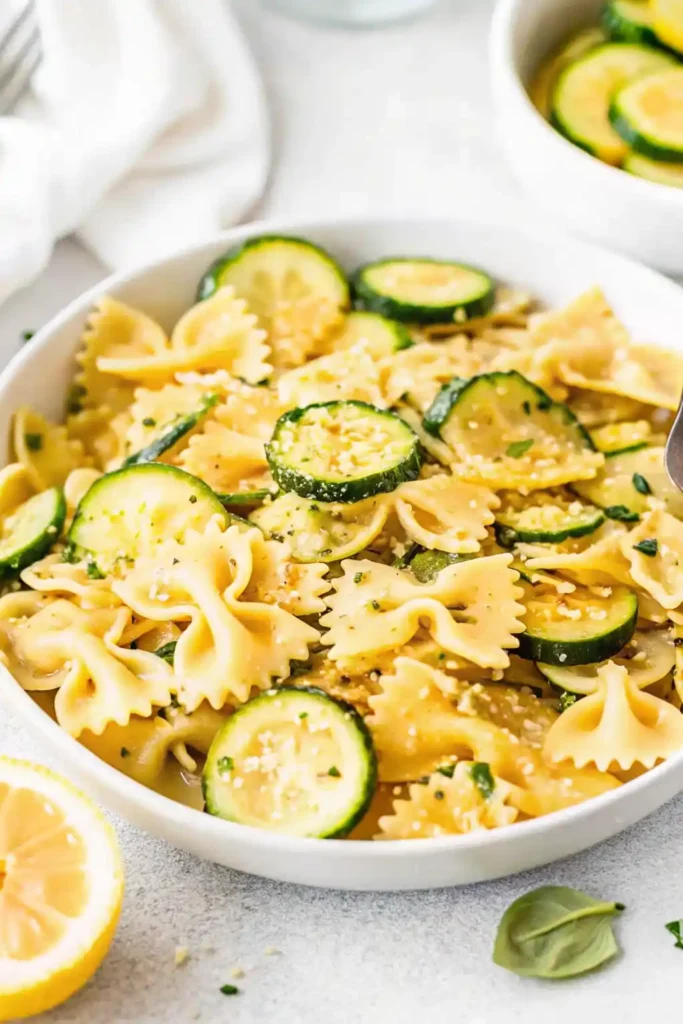
- High Visual Contrast: The vibrant green of the zucchini against the golden pasta and bright yellow lemon zest creates a high-fashion, “Insta-worthy” aesthetic.
Ingredient Notes & Pro Selections
Because this dish relies on a minimalist list of ingredients, the quality of your produce and the fat content of your dairy will dictate the final gourmet outcome.
The Zucchini
- Small to Medium Varieties: Look for zucchini that are firm and heavy for their size. Larger zucchini contain more seeds and a significantly higher water content, which makes them much harder to sear without they becoming mushy.
- The Slicing Technique: We recommend “half-moons” or thin ribbons. Uniformity is key here; you want every piece of zucchini to hit the pan surface at the same time to ensure an even caramelization.
The Citrus Powerhouse
- Fresh Lemons (2 Large): You will need both the zest and the juice. Use organic lemons if possible, as the zest (the outer flavedo) is where the essential oils reside. Avoid bottled lemon juice at all costs; the metallic preservatives will ruin the delicate dairy profile.
- The Zest Rule: Always zest your lemons before juicing them. It is nearly impossible to zest a squeezed lemon!
The Pasta
- Long Noodles (Spaghetti, Linguine, or Capellini): Long, cylindrical noodles provide the best “drag” for a butter-and-lemon emulsion.
- Bronze-Cut Pasta: Look for pasta labeled “Bronze-Cut” or “Al Bronzo.” This traditional extrusion method leaves the pasta with a rougher, chalky surface that acts like “velcro” for the silky sauce.
The Finishing Savory Duo
- Parmigiano-Reggiano: Grate your own cheese from a high-quality block. Pre-shredded cheese is coated in cellulose to prevent clumping, which prevents it from melting smoothly into a glossy sauce.
- Fresh Basil or Parsley: A flurry of fresh herbs at the very end provides the necessary floral finish that cuts through the richness of the butter.
The Science of the Dry-Sear: Avoiding the Mush
To achieve professional-grade results, one must understand how zucchini reacts to heat.
- Moisture Release: When zucchini hits a pan, the heat breaks down the cellular walls, releasing water. If the pan is overcrowded, this water turns to steam, and the zucchini “boils” in its own juices.
- The Maillard Reaction: By using a large skillet and high heat, you evaporate that moisture instantly. This allows the temperature of the zucchini surface to rise above 300°F, triggering the Maillard reaction—the chemical bonding of sugars and proteins that creates a savory, “roasted” flavor and a golden crust.
- Internal Steaming: The goal is to brown the outside while leaving the interior “tender-crisp.” This provides a necessary textural contrast to the soft pasta.
Step-by-Step Instructions
Step 1: Boil the Foundation
Bring a large pot of heavily salted water to a rolling boil. The Pro Tip: Your pasta water should taste like the sea. This is your only chance to season the noodles themselves. Cook your 12 oz of pasta until it is exactly 1 minute less than the package’s al dente instructions.
Step 2: The Liquid Gold Reserve
Before draining the pasta, use a heat-proof measuring cup to scoop out 1.5 cups of the starchy cooking water. This starch-heavy liquid is the secret emulsifier that binds the butter and lemon into a cohesive sauce. Do not forget this step!
Step 3: Master the Zucchini Sear
In a large skillet over medium-high heat, add 2 tablespoons of extra-virgin olive oil. Once the oil is shimmering, add the sliced zucchini in a relatively single layer. Let the zucchini sit undisturbed for 2–3 minutes until you see a deep golden crust on the bottom. Toss and cook for another 2 minutes. Remove the zucchini to a plate and set aside.
Step 4: Infuse the Aromatics
In the same skillet (don’t wash it!), turn the heat down to medium. Add 2 tablespoons of butter and 3 cloves of minced garlic. Sauté for only 30 seconds until the garlic is fragrant but not browned. Slowly pour in 1/4 cup of the reserved pasta water and the fresh lemon juice. This “deglazes” the pan, pulling up all the savory zucchini bits from the bottom.
Step 5: The Grand Emulsion
Add the cooked pasta directly into the skillet with the garlic and lemon. Add another 1/2 cup of reserved pasta water and 1/2 cup of grated parmesan. Using tongs, toss the mixture vigorously over medium heat for 1–2 minutes. The mechanical action of tossing forces the melted cheese and the starchy water to emulsify with the butter, forming a glossy, cream-like sauce.
Step 6: Combine and Finish
Return the seared zucchini to the pan. Add the lemon zest and a handful of fresh chopped herbs. Give it one final toss. If the pasta looks “thirsty” or dry, add more pasta water, 1/4 cup at a time, until the sauce reaches your desired silkiness.
Step 7: Garnish and Serve
Serve immediately in warmed bowls. Garnish with an extra sprinkle of parmesan and a crack of black pepper.
Secrets to a Pro-Level Finish
- Don’t Over-Boil the Sauce: Once the cheese and pasta are in the pan, keep the heat at a steady medium. If the pan is too hot, the cheese will seize and turn stringy rather than melting into a smooth sauce.
- The “Pasta Water” Buffer: Always save more water than you think you need. Pasta continues to absorb moisture even after it hits the bowl; if it gets sticky on the table, a tiny splash of hot pasta water will instantly revive the glossy sheen.
- Acid Adjustment: Lemons vary in their acidity. Always taste a piece of pasta after you’ve tossed it. If the flavor feels “flat,” add a tiny pinch of salt or an extra spritz of lemon juice to wake up the aromatics.
- Herb Preservation: Heat is the enemy of fresh basil’s bright green color. Always add the herbs at the very last second before serving to keep them vibrant and highly aromatic.
Variations and Substitutions
- The Protein Boost: Sauté 1 lb of jumbo shrimp or sliced chicken breast with the zucchini in Step 3. Remove them with the zucchini and fold them back in at the end.
- The “Crunch” Twist: Top the finished plated pasta with 2 tablespoons of toasted pine nuts or garlic breadcrumbs for a sophisticated textural contrast.
- Spicy Lemon Pasta: Add 1/2 teaspoon of red pepper flakes to the garlic in Step 4 for a subtle “Arrabbiata” style heat.
- Gluten-Free: Use high-quality chickpea or brown rice pasta. These pastas release even more starch, making for an exceptionally creamy sauce.
Storage and Reheating Guide
- Refrigerator: Store leftovers in an airtight container for up to 3 days.
- The Reheat Challenge: Butter-based emulsions will firm up in the fridge. To reheat properly, place the pasta in a skillet with a splash of water or milk over low heat. Toss constantly until the butter melts and the sauce re-emulsifies. Do not microwave on high power, as it will cause the butter to separate completely.
- Do Not Freeze: Cooked pasta in a delicate citrus emulsion does not survive the freezing process well; the noodles will become mushy and the sauce will break upon thawing.
FAQ
Why is my sauce oily and not creamy? This happens if the emulsion broke. It usually means there wasn’t enough starchy pasta water added, or the heat was too high during the tossing phase. Add a splash of hot water and toss vigorously to fix it.
Can I use yellow squash instead? Absolutely! Yellow summer squash works exactly like zucchini. For a beautiful presentation, use a mix of both green and yellow rounds.
Is this dish very sour? No. The richness of the butter and the salty umami of the parmesan cheese balance the lemon perfectly. It tastes savory and bright with a refreshing citrus finish.
What is the best pasta shape? Linguine and Spaghetti are the gold standards. If you prefer short pasta, Gemelli or Fusilli are excellent choices as their spirals trap the small bits of lemon zest and parmesan.
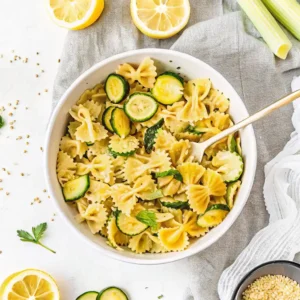
Zesty Lemon Zucchini Pasta
Ingredients
Method
- Bring a large pot of heavily salted water to a boil. Cook the pasta until 1 minute less than al dente. Drain and immediately rinse under cold water to stop the cooking process. Set aside to cool.
- In a large skillet, heat the olive oil over medium-high heat. Add the zucchini slices in a single layer. Let them sit undisturbed for 2–3 minutes to allow a golden-brown crust to form. Toss and cook for another 2 minutes until the zucchini is tender-crisp. Remove from the skillet and set aside.
- In the same skillet, lower the heat to medium and add the butter and minced garlic. Sauté for 30 seconds until fragrant but not browned. Add 1/4 cup of the reserved pasta water and the lemon juice to deglaze the pan.
- Add the cooked pasta to the skillet with the garlic and lemon. Pour in the remaining pasta water (about 1/2 cup) and the grated parmesan. Toss the pasta vigorously until the cheese has melted and the sauce has emulsified into a creamy texture.
- Return the seared zucchini to the pan and toss again. Add the lemon zest and fresh herbs. Adjust the seasoning with salt and pepper to taste. If the pasta appears dry, add more pasta water, a little at a time, until the sauce is silky.
- Serve immediately in warmed bowls, garnished with extra parmesan and a crack of black pepper.